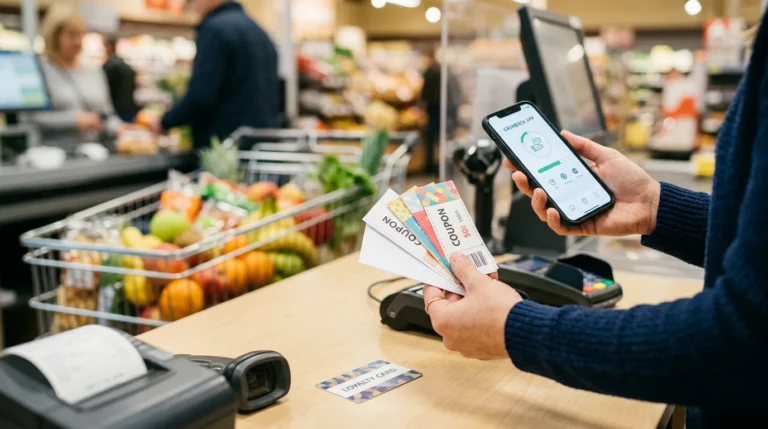

My grocery bill crept up on me the way these things do — a few dollars here, a few there, until one day the receipt said $187 and I genuinely thought the cashier had scanned something twice.
She hadn’t. That receipt is what finally pushed me to figure out which discount stores in the US are actually worth shopping at — and which ones just feel cheap while quietly costing you more. Because here’s the thing: discount shopping done right isn’t about digging through bargain bins or settling for junk. It’s about knowing which store is genuinely good at what, and sending your money there. Get that right and cutting 30–50% off household expenses is very doable. For most families, that’s $100–200 back in your pocket every month.
Disclaimer: The content on this site is for informational and entertainment purposes only. It consists of general money-saving tips and lifestyle hacks. Nothing on this site constitutes financial, investment, tax, or legal advice. Always do your own research and, where appropriate, seek advice from a qualified financial adviser before making any financial decisions. This post contains affiliate links. If you click and purchase, we may earn a small commission at no extra cost to you.
Below is where I’d actually send my money, category by category — plus the stuff to skip.
Grocery Chains That Actually Cut Your Food Bill
Some stores are cheap because they cut corners. The good discount grocers are cheap because they cut overhead — no fancy displays, no army of staff bagging your shopping, savings passed to you instead.
ALDI is the obvious first stop, and it earns the reputation. The quirks — quarter deposit for the cart, bring your own bags, a selection that’s a fraction of a regular supermarket’s — all exist to keep costs down. Regular shoppers report saving 40–60% versus traditional supermarkets; a weekly haul that runs $150 elsewhere often lands at $60–80 here. The limited selection sounds like a downside until you realize it also means fewer impulse buys.
Walmart Neighborhood Markets give you Walmart pricing in a format you can get in and out of in twenty minutes. The price-matching policy is the underused part — you can bring competitor deals to them instead of driving all over town.
WinCo Foods, if you’re in the western states, is employee-owned and quietly excellent. The bulk bins and case-lot sales are where the real value hides, and many locations are open 24 hours — handy for shopping off-peak when you actually have time to compare unit prices.
💡 Hack: Shop the weekly ad cycle. Most discount grocers start new sales on Wednesdays, and many mark down the previous week’s perishables at the same time — two sets of deals in one trip.
Big-Box Stores for Household Essentials
Walmart is still the benchmark for everyday low prices, but the real move here is the Great Value store brand — typically 20–30% cheaper than name brands, and for paper towels, detergent, and canned goods, most people honestly can’t tell the difference. Switching just those staples is worth $40–60 a month for a typical family.
Target looks pricier on the shelf, and sometimes it is. But the RedCard’s flat 5% off stacks on top of sale prices and coupons, which changes the math considerably if you shop there regularly anyway.
Meijer (Midwest folks, this one’s yours) combines groceries and general merchandise and runs genuine buy-one-get-one-free promotions constantly. That’s your cue to stock up on non-perishables, not to buy two of something you didn’t want one of.
💡 Hack: Download the store apps and turn on notifications. The exclusive mobile coupons — often $5–20 off a minimum spend — go to app users first, and sometimes only.
Free CashBack App for major US Stores, and the BEST PART you can get $5 bonus over and over again!
Watch The Video To See How!
Warehouse Clubs: When the Membership Fee Pays for Itself
Yes, they charge you to walk in the door. Whether that’s worth it comes down to how much you spend and how strategically you shop.
Costco is the premium pick. The Kirkland Signature brand rivals — and sometimes beats — the name brands it sits next to, for noticeably less. If your household spends $300+ a month on groceries, between bulk pricing and the cheap gas, the membership typically pays for itself within a couple of months.
Sam’s Club offers similar bulk savings with a lower membership fee, and the Scan & Go app lets you skip the checkout line entirely. If you’ve ever stood in a warehouse club line on a Saturday, you understand the appeal.
BJ’s Wholesale Club has one trick the others don’t: it accepts manufacturer coupons. Stack those with store sales and dedicated couponers routinely hit 50–70% off household products.
The catch with all three is the same: bulk is only a bargain if you use it. A 48-pack of toilet paper you have nowhere to store isn’t a deal, it’s clutter with a receipt.
💡 Hack: Split bulk buys with a neighbor or family member. You get the wholesale price, they get half the pallet of paper towels, nobody overbuys.
Dollar Stores: Good at Some Things, Terrible at Others
Dollar stores have moved well past cheap party favors — there’s real value here now, but only in certain aisles.
Dollar Tree holds everything at $1.25, which makes it ideal for things you use up and don’t need a premium version of: cleaning supplies, greeting cards (seriously, stop paying $6 for cards), storage containers, basic toiletries.
Dollar General carries a wider range including refrigerated and frozen items, and — the part most people miss — its digital coupons stack with manufacturer coupons. That combination can push name-brand prices absurdly low.
Family Dollar runs frequent “spend $25, get $5 off” promotions, which is effectively 20% off already-low prices.
What to skip: electronics, anything that needs to be durable (tools especially), and — this is the sneaky one — small-package items sold by weight. That $1.25 bottle can cost more per ounce than the big bottle at the grocery store.
💡 Hack: Check unit prices, always. Dollar store packaging is often smaller than it looks, and per-ounce math is the only honest comparison.
Discount Department Stores for Clothes and Home Goods
TJ Maxx, Marshalls, and HomeGoods (all the same parent company) sell overstock and end-of-season merchandise from major brands, and patient shoppers regularly find items at 60–80% below retail. The inventory turns over constantly — which is frustrating if you need a specific thing today, and addictive if you enjoy the hunt.
Nordstrom Rack plays the same game with higher-end brands, and its Clear the Rack events pile extra markdowns on top of already-reduced prices.
Burlington is the more predictable option — steadier inventory, so you can actually go in looking for something specific instead of just browsing and hoping.
The mindset shift these stores require: go in flexible. You might not find the exact thing you wanted, but you’ll often find something better at a price that makes the swap easy.
💡 Hack: Go Tuesday through Thursday. New shipments typically land midweek, and you’ll get to them before the weekend crowds pick everything over.
Outlet and Factory Stores
Outlets cut out the retail markup by selling direct from the manufacturer — and for the right purchases, the savings are real.
Athletic brands like Nike, Adidas, and Under Armour sell last season’s styles at 30–50% off. The quality is identical; you’re just wearing last year’s colorway, which nobody but you will ever know.
Kitchen and home outlets — Le Creuset, Corningware, Pyrex — sell first-quality stock alongside slightly imperfect pieces marked down further. A cosmetic blemish on the bottom of a Dutch oven can save you $50 on something that cooks exactly the same.
Clothing outlets for Gap, Banana Republic, and J.Crew make a decent work wardrobe affordable without the department store price tags.
One warning, because outlets are engineered to exploit it: a markdown on something you didn’t need is not a saving. Only buy what you’d have bought at full price — the discount just makes it smarter.
💡 Hack: Join the outlet email lists. Extra markdowns and subscriber-only events tend to run during slow periods, and email is how you hear about them first.
Frequently Asked Questions
Which discount stores have the best quality products?
ALDI and Costco consistently come out on top. ALDI’s narrow selection means everything on the shelf has to earn its place, and Costco’s Kirkland brand often beats the name brands next to it. For clothing, outlet versions of established brands hold the same quality standards as full-price retail.
How much can I realistically save?
Most families cut 25–40% off total household spending by matching each store to what it does best. A household spending $600 a month on groceries and essentials can realistically get that down to $350–450.
Are warehouse club memberships worth it for small households?
The math works best at $250+ a month in grocery and household spending. Smaller households can still come out ahead by sticking to non-perishables, splitting bulk buys with others, or leaning on the extras — cheap gas and pharmacy benefits alone justify some memberships.
What should I avoid buying at dollar stores?
Anything where durability matters (tools, electronics), items sold by weight that may cost more per unit than bigger packages elsewhere, and products with safety implications — electrical items and kids’ toys that may not meet the standards you’d expect. Consumables and basic household items are the sweet spot.
Pick One Store and Start This Week
The households that save the most don’t have one favorite discount store — they have a rotation. ALDI for groceries, Costco for bulk, TJ Maxx for clothes, the dollar store for consumables. Each store for the thing it’s genuinely good at.
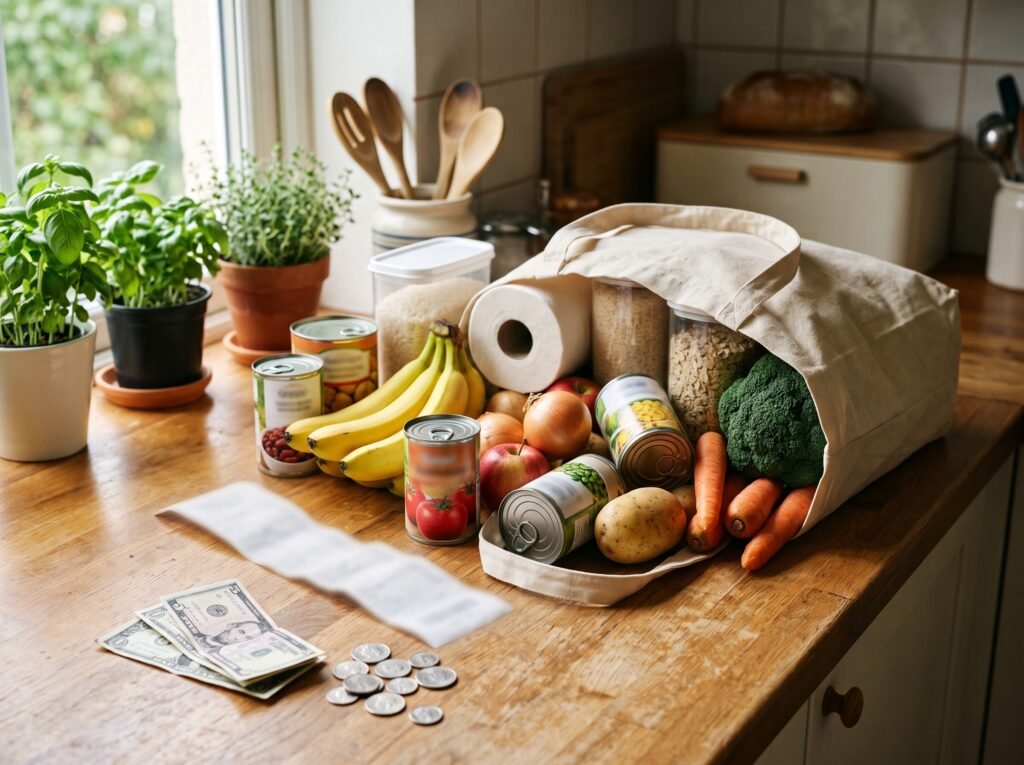
You don’t need to build that whole system by Friday. Pick one store from this list that fits how you already shop, try it for your next regular trip, and compare the receipt to your usual one. Add a second store once the first feels routine.
Every dollar you don’t hand over for overpriced essentials is a dollar for something your family actually cares about. That $187 receipt of mine? Same list runs me around $110 now — and nobody in my house has noticed a single difference except me.