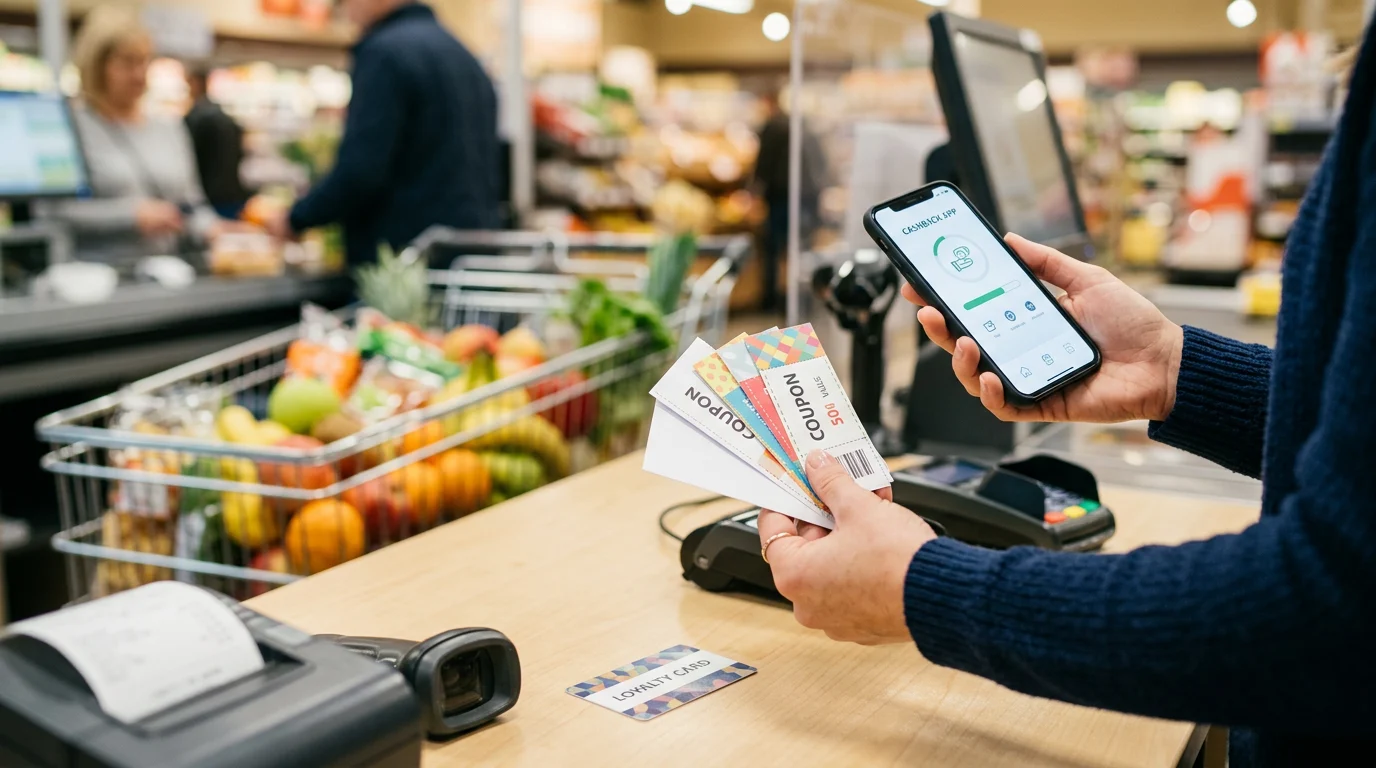

Last week my grocery run came to $80 at the register. I handed over a small stack of coupons, scanned my loyalty card, and paid $52. Nobody behind me sighed, the cashier didn’t blink, and the whole thing took about ninety seconds.
Disclaimer: The content on this site is for informational and entertainment purposes only. It consists of general money-saving tips and lifestyle hacks. Nothing on this site constitutes financial, investment, tax, or legal advice. Always do your own research and, where appropriate, seek advice from a qualified financial adviser before making any financial decisions. This post contains affiliate links. If you click and purchase, we may earn a small commission at no extra cost to you.
That’s coupon stacking. Not the extreme-couponing stuff from reality TV, where people wheel out three carts and pay 12 cents — just the quiet habit of layering a few discounts on top of each other instead of using one and calling it a day.
If you’re new to this, good. Beginners actually have an advantage: you haven’t picked up any bad habits yet. The strategies below are the ones I’d hand to a friend who’s never clipped a coupon in her life, and they’re realistically worth $50 or more a month on stuff you’re already buying.
What Coupon Stacking Actually Means
Stacking is using more than one discount on the same item. That’s it.
The discounts come in a few flavors:
- Manufacturer coupons (from brands like Tide or Heinz)
- Store coupons and loyalty discounts
- Cashback apps
- Sale or clearance prices
Most people use one of these and stop. But plenty of stores let you layer them. Say cereal costs $3. You’ve got a 50¢ manufacturer coupon, your loyalty card knocks off 10%, and a cashback app gives you 5% back. You end up paying around $2.10 — a 30% saving on something that was on your list anyway.
One thing before you start: every retailer has its own rules about what combines with what. Some are generous, some aren’t.
💡 Hack: Look up your store’s coupon policy online (or just ask at customer service). Knowing the rules upfront saves you an awkward conversation at the checkout later.
Get More Out of Your Loyalty Card Than Points
Your store loyalty program is doing more than collecting points you’ll forget about. Kroger sends personalized digital coupons based on what you actually buy. Target does similar through Target Circle, and most regional grocery chains have their own version. These offers stack happily with manufacturer coupons — and most people let them expire unopened in the app.
A few habits worth building:
- Open the app once a week and see what’s landed
- Plan bigger shops around the high-value offers ($2 off a $10 spend, that sort of thing)
- Watch for “spend and save” promotions
- Save your big shop for bonus points events when you can
Checking my store’s app before shopping and planning around whatever offers have appeared saves me an extra $15–20 most months. A $3-off-$15 loyalty coupon plus manufacturer coupons on things already in your cart adds up fast, and it takes minutes.
💡 Hack: Set a weekly phone reminder to check your loyalty apps. It’s free money that most people leave on the table purely because they forget.
Free CashBack App for major US Stores, and the BEST PART you can get $5 bonus over and over again!
Watch The Video To See How!
Finding and Organizing Manufacturer Coupons
Manufacturer coupons are the backbone of stacking, and they’re hiding in more places than you’d think:
- Brand websites and their social media pages
- Sunday newspaper inserts (yes, still)
- Coupon websites and apps
- Product packaging and register receipts (those Catalina coupons that print with your receipt)
- Brand email newsletters
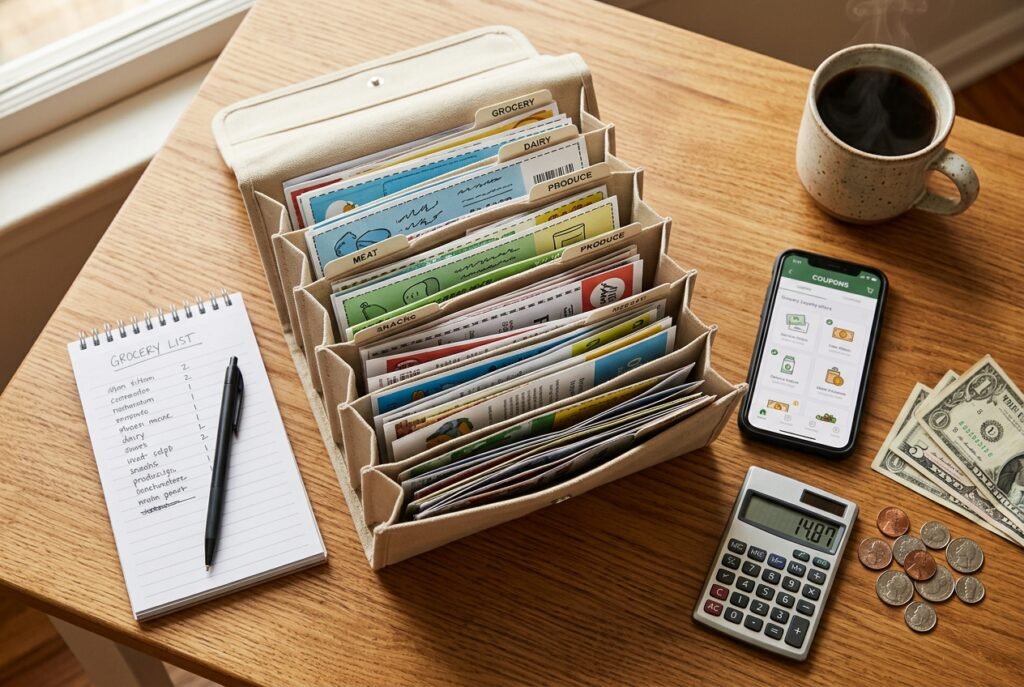
The finding part is easy. The keeping-track part is where beginners come unstuck — and no, you don’t need a filing cabinet. An envelope in your bag works. So does a small accordion file sorted by expiration date or category, whichever matches how you shop.
I keep mine in a dedicated section of my purse and check them against my shopping list before I leave the house. Boring habit, but it means I never collect a coupon and then fail to use it, which is somehow more annoying than never having it at all.
💡 Hack: Photograph your paper coupons on your phone. If one gets damaged or left at home, you’ve at least got a record of what you were entitled to.
Cashback Apps: The Layer That Works While You Sleep
Digital cashback is the easiest layer for a beginner because, once it’s set up, it mostly runs itself.
The ones worth a look:
- Ibotta – cashback on groceries at most major stores
- Fetch – scan any receipt and earn points on featured brands
- Checkout 51 – money back on weekly featured offers
- Rakuten – for online shopping
Here’s how it fits into the stack: loyalty card, paper coupons, pay with a cashback credit card if you have one, then scan the receipt in an app afterwards. Four layers, one shop.
Don’t download all of them at once. Start with one — Fetch is a sensible first pick since it works with any receipt — and add others once scanning becomes second nature.
And actually withdraw your money. Cashback sitting in an app forever isn’t a saving. Most apps pay out to PayPal, your bank, or gift cards once you hit a minimum threshold.
💡 Hack: Turn on push notifications for whichever apps you use. They’ll flag limited-time offers and nag you to scan receipts before deadlines pass — useful nagging, for once.
Timing Matters More Than You’d Think
When you shop shapes how much stacking can do for you.
End-of-season clearance is the big one. Clearance price + coupon + cashback can knock 70% off. I buy summer stuff in August and winter gear in February, when the stores are desperate to move it.
Weekly cycles help too. Most grocery stores rotate promotions on Wednesdays — if you’re holding coupons for items about to go on sale, that’s your moment.
Then there are the seasonal patterns:
- August–September: back-to-school supplies and lunchbox items
- January: health foods, when everyone’s on a New Year kick
- March–April: cleaning products
- The run-up to holidays: gifts and entertaining
None of this requires spreadsheets. It just means holding a coupon for a week or two if you suspect the item’s about to be discounted, rather than burning it at full price.
💡 Hack: Keep a simple calendar note of when your regular products tend to go on sale. Even a rough memory of the pattern stops you wasting coupons at full price.
Slightly Cleverer Stacks (Still Beginner-Friendly)
Comfortable with the basics? A few combinations squeeze out more without much added hassle.
Price matching. Some stores match a competitor’s price and still take your coupons on top — effectively stacking their rival’s sale with their own discounts.
Multi-buy deals. On “3 for 2” or buy-one-get-one offers, manufacturer coupons often apply to each item. That 50¢ coupon might work twice in one BOGO.
Brand promotions. “Spend $20 on participating brands, get $5 off” deals usually don’t block your individual item coupons — you get both.
Gift card offers. Spend $50, get a $10 gift card back. If you were spending the $50 anyway, with coupons and cashback applied, the gift card is pure bonus on top.
💡 Hack: Not sure whether two discounts combine? Ask at customer service before you get in line. Policies vary and staff would rather tell you upfront than sort it out at the register.
Mistakes That Cost Beginners Money
A few traps worth knowing about before you fall into them.
Expired coupons. Obvious, but when you’re juggling a dozen it’s the one that slips. Weed out expired ones once a week.
Skipping the fine print. Minimum spends, specific sizes, usage limits — five minutes of reading saves a red face at checkout.
Buying things because you have a coupon. A 75¢ coupon on something you don’t need isn’t a 75¢ saving. It’s the full remaining price of an item you didn’t want.
Ignoring coupon limits. Many stores cap identical coupons at 4–6 per transaction. Plan around it, or split a big shop in two if the savings genuinely justify it.
Brand switching that costs you more. If the name brand with a coupon still comes out pricier than your usual store-brand alternative, the coupon has failed at its one job. Stick with what works.
💡 Hack: Before each trip, spend two minutes matching coupons against your actual shopping list. It kills impulse coupon spending dead.
[RELATED POST: 20 Simple Ways to Cut Your Monthly Food Bill in Half]
Frequently Asked Questions
Can I really save $50+ a month just by stacking coupons?
For a lot of beginners, yes — $30–60 a month is a realistic range once the routine sticks. The condition: only stack on things you’d buy anyway. Household essentials, toiletries, and regular food items are where it adds up quickest.
Do stores actually let you use multiple coupons on one item?
Generally you can pair one manufacturer coupon with one store coupon per item, then layer cashback apps and loyalty discounts on top of that. Policies differ between retailers, though, so check yours or ask a staff member.
How much time does this take once you’ve got the hang of it?
About 10–15 minutes of prep per week. The shopping itself barely takes any longer, because the organizing happened at home.
What if my coupons don’t scan at the register?
Stay polite. Sometimes the cashier just isn’t familiar with the policy, or the system needs a manual override. Ask for a manager if it comes to it, and keep a copy of the store’s coupon policy on your phone as backup.
Start Small, Start This Week
You don’t need to master everything in this guide at once — and honestly, trying to would put you off. Pick one thing. Check your loyalty app before your next shop, or download a single cashback app tonight.
Even a modest $20–30 a month is $300+ a year. That’s the holidays covered, a weekend away, or a decent bump to the emergency fund — for the price of a few minutes of prep and a slightly fuller purse.
Your next shopping trip is the obvious place to start. Take one strategy with you and see what comes off the total.