
Disclaimer: The content on this site is for informational and entertainment purposes only. It consists of general money-saving tips and lifestyle hacks. Nothing on this site constitutes financial, investment, tax, or legal advice. Always do your own research and, where appropriate, seek advice from a qualified financial adviser before making any financial decisions. This post contains affiliate links. If you click and purchase, we may earn a small commission at no extra cost to you.
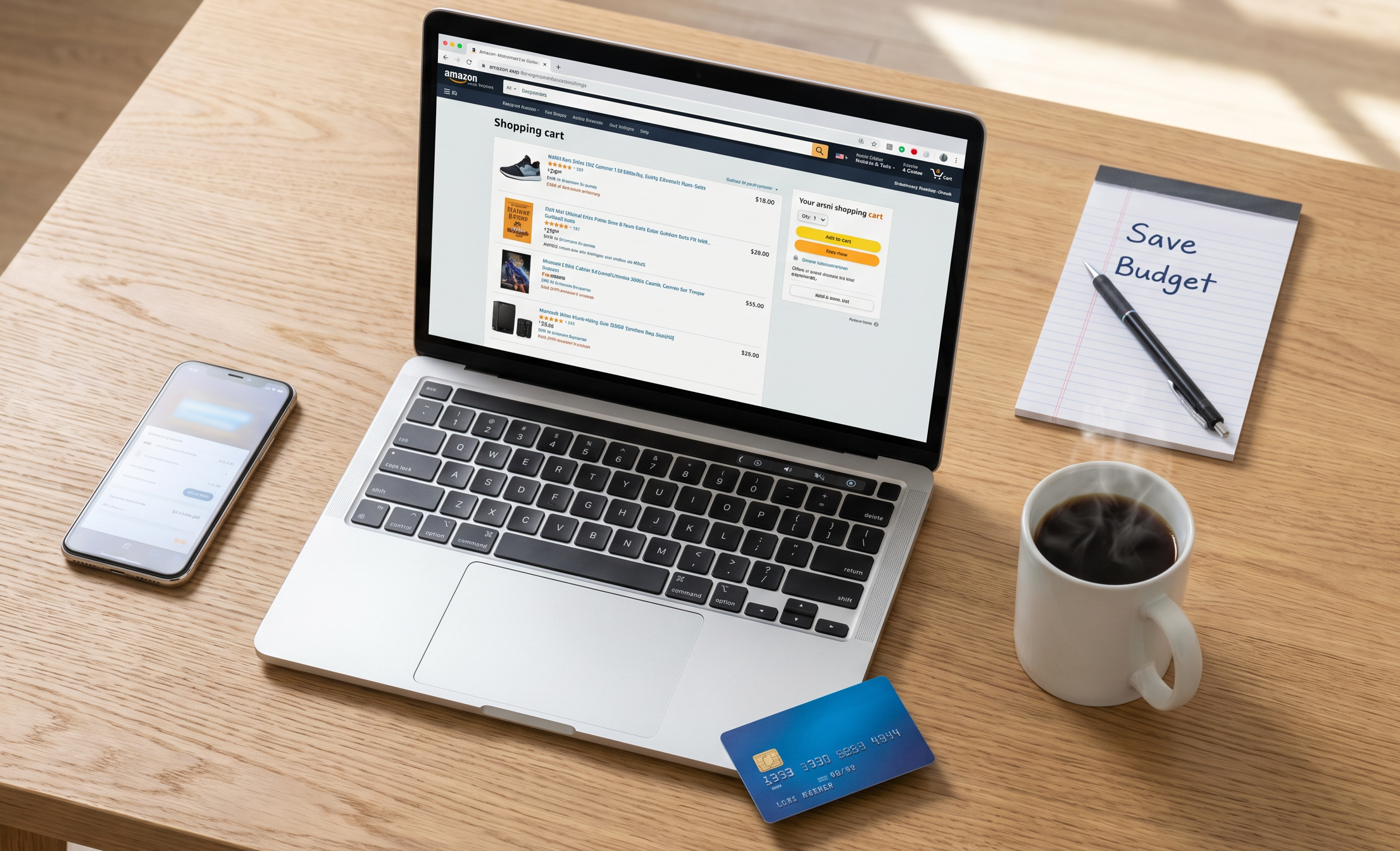
You know how it goes—you open Amazon to buy one thing, and somehow your basket ends up at $50 (or more). Half of it wasn’t even on your list.
It happens to everyone.
The good news? Amazon doesn’t have to be a budget killer. The Amazon Money Saving tip will help you understand how it works—pricing, timing, little hidden features—you can actually use it to save money instead of lose it. With these Amazon Money Saving strategies, your shopping experience can become budget-friendly.
These aren’t complicated tricks either. Just a few small habits that, over time, make a noticeable difference.
With these Amazon Money Saving tips, you can make smarter purchases and stretch your budget further by utilizing effective strategies for Amazon Money Saving.
Prices Change More Than You Think
One of the biggest things people miss: Amazon prices move constantly. Sometimes multiple times a day.
That $80 item you’re looking at today? It could easily drop to $65 tomorrow.
Instead of checking manually all the time:
- Add items to your wishlist
- Leave them in your basket or “Save for Later”
- Check back every few days
You don’t need to obsess over it—just don’t rush.
Simple trick: Leave items sitting in your basket for a day or two. Occasionally, Amazon nudges you with a small discount to get you to check out. It doesn’t happen every time, but when it does, it’s basically free money.
Don’t Ignore Coupons (They’re Everywhere)
Amazon has a full coupons section—but most people never look at it.
Search “Amazon coupons” and you’ll find discounts on everyday stuff like cleaning products, toiletries, and even electronics. These aren’t tiny savings either—20–30% off is pretty common.
Also keep an eye out for:
- Lightning Deals (short-term discounts)
- Subscribe & Save offers
- Multi-buy deals
Before you check out, always pause for a second and see if anything applies. It takes 10 seconds and can save you a decent chunk.
Timing Makes a Difference
Just like shops run sales, Amazon has patterns.
If you’re buying something bigger, timing matters more than you think.
Generally cheaper times:
- Early in the week (especially Mondays)
- Midweek afternoons
- End of the month when sellers clear stock
Usually more expensive:
- Friday evenings
- Just before payday
- Peak shopping periods (especially early December)
You don’t need to overthink it—but if you can wait a few days, it’s often worth it.
Use What Amazon Already Gives You
Amazon actually has some decent built-in ways to save—you just have to use them properly.
Subscribe & Save
Great for things you buy regularly. You get a discount, and you can cancel anytime. No catch, just don’t forget to manage it.
Amazon Warehouse
This is where returned items go. Often they’re basically new—just opened and sent back. Discounts are usually 15–30%.
It’s one of the easiest wins on the site.

Your Basket Is a Tool (Not Just Storage)
Most people treat their basket like a checkout queue. That’s a mistake.
Use it more like a holding area.
The 24-hour rule works surprisingly well:
Add what you want, then leave it. Come back the next day and see if you still care about it.
A lot of the time, you won’t.
For bigger purchases, give it a week. If you still want it—and can explain why—it’s probably a good buy. If not, you’ve just saved yourself money without trying.
Make Prime Worth It (Or Don’t Have It)
If you’re paying for Prime, it should be saving you money—not just making delivery faster.
Things people forget they get:
- Free books and magazines (Prime Reading)
- Photo storage
- Gaming perks
- Early access to deals
If you’re not using any of that—and not saving at least the monthly cost—it might not be worth keeping.
Also worth knowing: you can share Prime with someone in your household and split the cost.
Watch Out for the Traps
Amazon is very good at encouraging you to spend more.
A few things to be aware of:
- “Frequently bought together” isn’t always a deal
- One-click buying removes any pause (dangerous)
- Big percentage discounts aren’t always real savings
And one big one:
Just because it’s on Amazon doesn’t mean it’s the cheapest.
For anything over $30, it’s worth a quick search elsewhere. Sometimes you’ll find it cheaper—or at least confirm you’re getting a fair price.
The Real Trick: Slow Down
Most of the savings don’t come from clever hacks—they come from not rushing.
- Wait a day
- Check the price again
- Ask yourself if you actually need it
That alone cuts out a huge amount of unnecessary spending.
Where to Start
You don’t need to use every trick at once.
Start with:
- Letting items sit in your basket
- Checking prices over a couple of days
- Using the 24-hour rule
That’s enough to make a real difference.
Over time, these habits become automatic—and you’ll probably notice you’re spending less without feeling like you’re cutting back.
Amazon isn’t the problem—it’s how quickly we click “Buy Now.”
Slow it down just a little, and you’ll keep a lot more money in your pocket without giving anything up.
Like to Eat Out?, well check this post out.