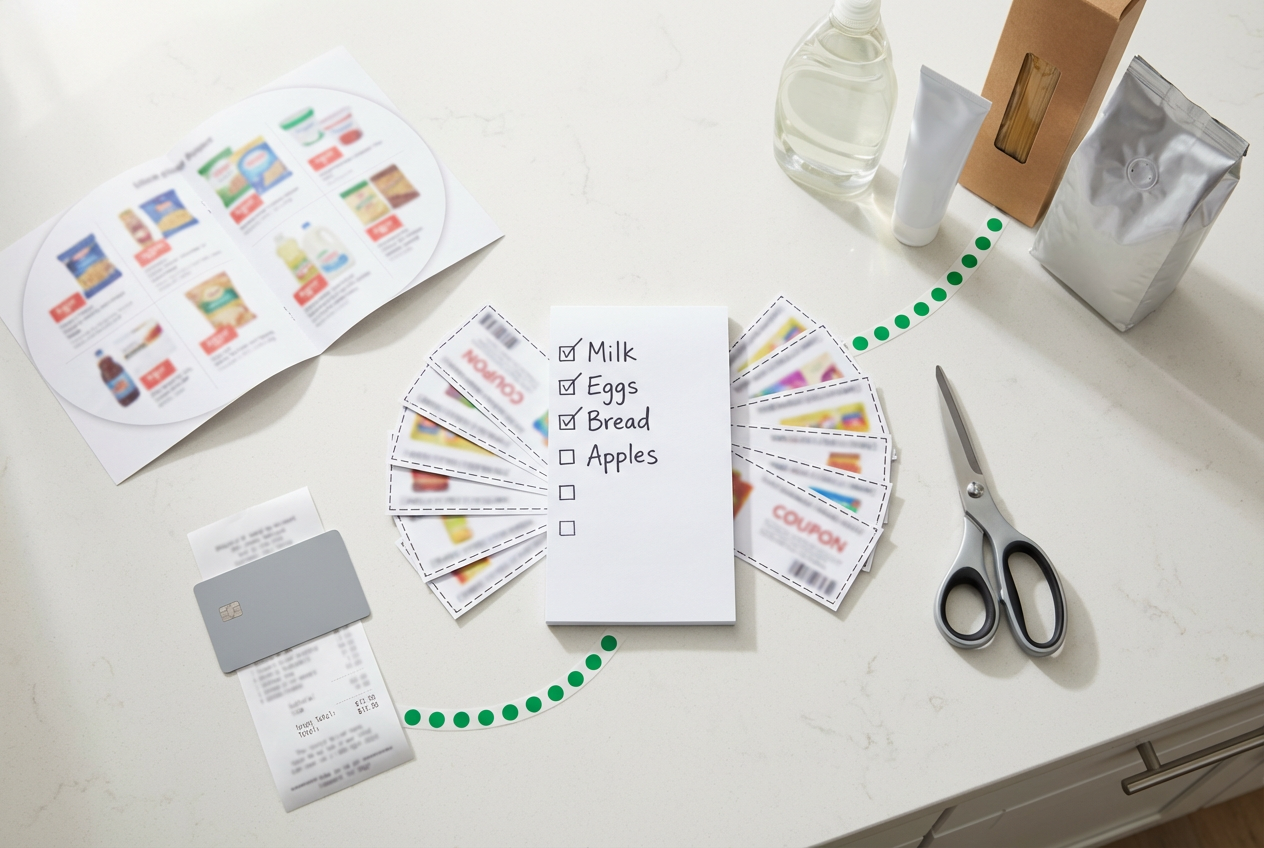

You’re at the checkout watching your grocery total creep toward $80… and then you remember—you actually planned for this because you have the best coupon stacking strategies.
A few taps on your phone, a couple of coupons, your store rewards… and suddenly your total drops to around $52.
That’s not extreme couponing. That’s just using the system properly.
Disclaimer: The content on this site is for informational and entertainment purposes only. It consists of general money-saving tips and lifestyle hacks. Nothing on this site constitutes financial, investment, tax, or legal advice. Always do your own research and, where appropriate, seek advice from a qualified financial adviser before making any financial decisions. This post contains affiliate links. If you click and purchase, we may earn a small commission at no extra cost to you.
If you’ve ever wondered how some people seem to save way more at the register while you’re paying full price, this is usually the reason. And the good news? You don’t need a binder full of coupons or hours of prep to make it work.
In this guide, I’ll walk you through simple, realistic coupon stacking strategies you can start using right away—no overwhelm, no complicated setups. Done consistently, saving $50+ a month is very doable.
What Coupon Stacking Actually Means (And Why It Works)
At its core, coupon stacking is just combining multiple types of discounts on the same item.
Most people use one coupon and call it a day. That’s fine—but it’s also leaving money on the table.
Here’s where it gets interesting. Many stores allow you to stack:
- A manufacturer coupon (from the brand)
- A store coupon or loyalty discount
- Cashback from an app
- Sale or clearance pricing
When you layer those together, the savings add up fast.
For example:
- Item price: $4
- Manufacturer coupon: –$1
- Store promo: –$0.50
- Cashback app: –$0.50
Now you’re paying $2 instead of $4. That’s not a small win—that’s 50% off something you were already buying.
💡 Tip: Every store has slightly different rules. A quick check of their coupon policy (or asking at customer service) saves a lot of confusion later.
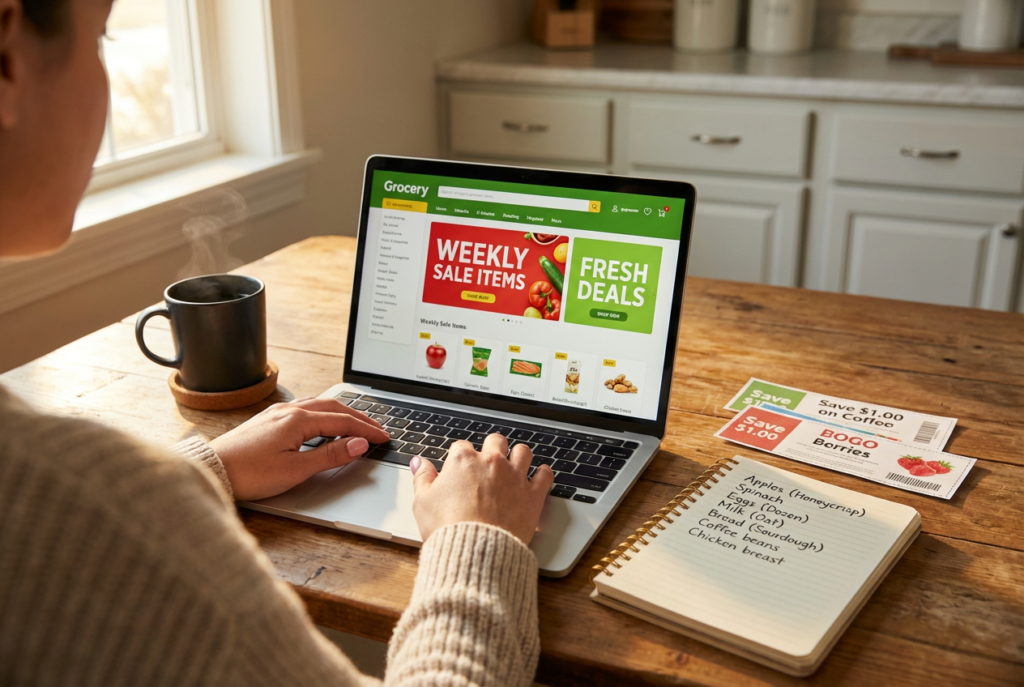
Don’t Ignore Store Rewards (They’re Half the Game)
Your grocery store app or rewards card isn’t just there for points—it’s one of your best tools for stacking.
Stores like Target, Kroger, Walmart, CVS, and Walgreens all have their own apps with:
- Digital coupons
- Personalized discounts
- “Spend X,getY off” offers
The trick is actually checking them.
Most people don’t.
A quick 2–3 minute check before shopping can easily save you $10–$20 on a normal trip—especially when you combine those offers with manufacturer coupons.
A simple system that works:
- Open your store app before shopping
- Clip any relevant coupons
- Build your list around the best deals (not random items)
💡 Tip: Set a weekly reminder on your phone to check your store app. It’s one of the easiest wins most people skip.
Finding Coupons Without Making It a Chore
You don’t need to spend hours hunting for coupons. The goal is to make this easy enough that you actually stick with it.
Good places to find them:
- Store apps (this is your main one)
- Brand websites and emails
- Coupon apps
- Sunday inserts (still useful, especially for groceries)
You can go deeper if you want—but honestly, you don’t need to.
As for organizing them, keep it simple:
- A small folder or envelope
- Or just rely on digital coupons
If it feels like a system you won’t maintain, it’s too complicated.
💡 Tip: If you use paper coupons, keep them somewhere you won’t forget—like your wallet or car. The best coupon is the one you actually use.
Cashback Apps: The Easiest Way to Stack Extra Savings
If you only do one thing from this post—use cashback apps.
They’re the easiest layer to add because they don’t interfere with anything else.
Some popular options in the US:
- Ibotta
- Fetch Rewards
- Rakuten (great for online shopping)
- Checkout 51
How it works:
- Shop as usual
- Scan your receipt (or link your account)
- Get money back
That’s it.
The key is consistency. If you scan every receipt, even small amounts add up quickly.
💡 Tip: Start with just one app (like Ibotta or Fetch). Once it becomes a habit, you can add more if you want.
Timing Your Shopping (This Matters More Than You Think)
When you buy something can make a big difference.
Most stores follow predictable cycles:
- Weekly sales (often starting midweek)
- Seasonal clearances
- Holiday promotions
The best deals usually happen when you combine:
- A sale price
- A coupon
- Cashback
That’s where you get those big “how did I only pay that?” moments.
A few patterns worth knowing:
- January → health & fitness deals
- Back-to-school → snacks, lunch items
- Post-holiday → clearance everything
- End of season → biggest discounts
💡 Tip: If you don’t need something immediately, wait. A week or two can make a surprising difference in price.
Easy “Next Level” Tricks (Without Overcomplicating It)
Once you’re comfortable with the basics, a few extra tricks can boost your savings without adding much effort.
Stack with credit card rewards
Use a cashback credit card (if you already have one) and layer it with everything else.
Use store promotions wisely
Deals like “Buy 2, get 1 free” or “Spend $20, save $5” are perfect for stacking with coupons.
Plan small stock-ups
If something you use regularly is heavily discounted, it’s worth grabbing a couple extra—not 20, just a few.
Watch for bonus offers
Apps and stores often run limited-time boosts. These are the moments where savings really jump.
💡 Tip: Don’t try to optimize everything. Focus on the bigger, easier wins.
Common Mistakes That Actually Cost You Money
A few things can quietly undo your savings if you’re not careful:
Buying things just because you have a coupon
If you don’t need it, it’s not a deal.
Forgetting to activate digital coupons
This happens all the time—and it’s frustrating at checkout.
Using the wrong app or link
For online shopping especially, you need to go through the cashback app.
Ignoring limits and fine print
Some coupons only apply to certain sizes or quantities.
Trying to stack too much at once
If it gets confusing, keep it simple. One solid stack is better than a complicated one that fails.
💡 Tip: Before shopping, take 2 minutes to match your coupons with your list. It keeps everything focused.
Frequently Asked Questions
Can you really save $50+ a month doing this?
Yes—especially on groceries and household items. Most people hit $30–$60 pretty quickly once they get into a rhythm.
Can you use multiple coupons on one item?
Usually one manufacturer coupon + one store coupon, plus cashback and rewards. It depends on the store, but that’s a common setup.
How much time does this take?
About 10–15 minutes of prep before shopping. Once you’re used to it, it’s quick.
What if a coupon doesn’t work?
It happens. Stay calm, double-check the terms, and move on. Not every deal will work perfectly—and that’s okay.
Start Simple (That’s the Real Secret)
You don’t need to go all-in from day one.
Start with:
- One store rewards program
- One cashback app
- A quick check before shopping
That’s enough to start saving real money.
Over time, it becomes automatic. You stop paying full price without even thinking about it.
And that’s really the goal—not perfection, just better habits.
Because at the end of the month, an extra $50 in your pocket feels a lot better than wondering where it all went.
Have you seen these Amazon Hacks?